Shop Safety Gear Guide
Disclosure: This page contains affiliate links. If you buy through them we may earn a commission at no extra cost to you. As an Amazon Associate I earn from qualifying purchases. Details.
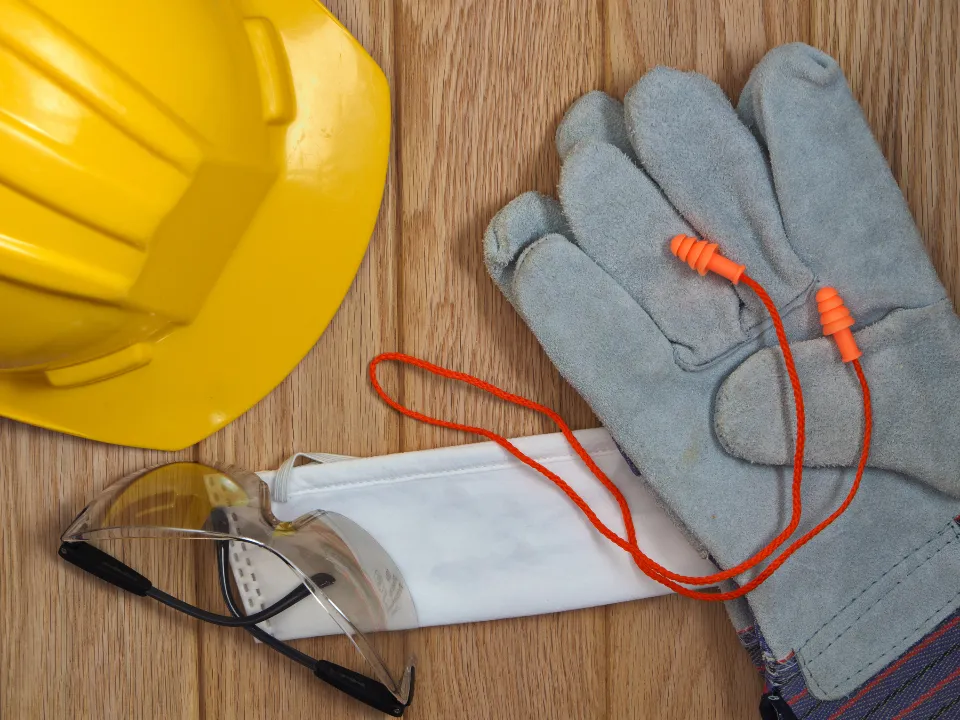
Safety gear is the gift every woodworker needs and few buy enough of. Comfortable gear gets worn; uncomfortable gear sits on the bench. This guide covers what to get and what the markings mean. It uses OSHA's workplace eye-protection rule as a reference point. That rule applies to employers, but it's a useful benchmark at home too.
Eye protection
OSHA's rule (29 CFR 1910.133) is a good guide to what matters:
- Eye protection should guard against flying particles, a constant in woodworking.
- It should have side protection where there's a hazard from flying objects. Clip-on side shields are acceptable under the rule.
- People who wear prescription glasses need eye protection that incorporates the prescription or fits over their glasses without disturbing them.
- Eye protection should comply with ANSI Z87.1 (OSHA lists the 2010, 2003, and 1989 editions). Look for the Z87 marking.
- Eye protection should be marked so the manufacturer can be identified.
| Type | Best for |
|---|---|
| Safety glasses with side shields | Most shop work |
| Over-the-glasses (OTG) safety glasses | People who wear prescription glasses |
| Goggles | Dust, chips from all directions, splashes |
| Face shield (worn over safety glasses) | Lathe turning, grinding |
Z87 safety glasses → Amazon · Over-the-glasses safety glasses → Amazon · Face shields → Amazon
Tip: buy several pairs and leave them where the tools are. Anti-fog coatings help with masks.
Hearing protection
Many power tools are loud enough that hearing protection is a good habit, especially saws, routers, planers, and shop vacuums.
| Type | Pros | Cons |
|---|---|---|
| Foam earplugs | Inexpensive, high protection when inserted correctly | Fit takes practice |
| Reusable earplugs | Washable, quick | Fit varies |
| Earmuffs | Easy on and off, consistent fit | Warm; may conflict with glasses |
| Electronic or Bluetooth earmuffs | Can allow conversation or audio | More expensive; battery |
Fit matters more than the rating on the package. A plug that's not inserted properly protects much less. Earmuffs → Amazon · Foam earplugs → Amazon
Respiratory protection
Sanding, cutting, and routing all produce fine dust. Options, from basic to advanced:
- Disposable particulate respirators, for occasional sanding. Look for a rating for particulates, not a simple comfort mask.
- Reusable half-face respirator with particulate filters, for regular use. Half-face respirators → Amazon
- Powered air-purifying respirator (PAPR), for heavy daily use; more expensive.
- Dust collection and air filtration reduce dust at the source. Shop air filters → Amazon
Fit is critical: a respirator that doesn't seal doesn't protect. Facial hair interferes with the seal on tight-fitting respirators.
Hands and feet
- Work gloves for handling lumber and sheet goods. Don't wear gloves near spinning blades, bits, or lathes, where they can be caught and pull a hand in.
- Cut-resistant gloves for carving or handling sharp tools. Cut-resistant gloves → Amazon
- Sturdy closed-toe shoes. Dropped boards and tools are common.
Safety accessories
- Push sticks and push blocks keep hands away from table saw and router table blades. Push sticks → Amazon
- First aid kit within reach. First aid kits → Amazon
- Fire extinguisher suited to the shop. Finishing rags and sawdust are combustible. Fire extinguishers → Amazon
- Good lighting. Shadows cause mistakes.
Safe habits that cost nothing
- Read the tool's manual, including the safety section.
- Unplug or remove the battery before changing blades or bits.
- Keep the work area clear.
- No loose sleeves, jewelry, or long hair near spinning tools.
- Never work when tired or rushed.
As a gift
A "safety kit" of Z87 glasses (OTG if they wear glasses), earmuffs, foam plugs, and a respirator is one of the most useful workshop gifts at any budget.
FAQ
What does Z87 mean on safety glasses?
It refers to the ANSI Z87.1 standard for eye and face protection, which OSHA's workplace eye-protection rule references. Look for the Z87 marking on the frame.
Can I wear my prescription glasses instead of safety glasses?
Regular glasses aren't designed as safety eyewear. OSHA's workplace rule says people with prescription lenses need eye protection that incorporates the prescription or fits over the glasses without disturbing them.
Do I need a respirator for sanding?
Many woodworkers wear a respirator or dust mask for sanding and cutting. Choose one rated for particulates and make sure it fits.
Related guides
- Best Starter Tool Kit: What a New DIYer Actually Needs
- Workshop Gifts Under $25, $50, and $100
- Gifts for Woodworkers by Skill Level (Beginner to Advanced)