Building a Starter Tool Kit
Disclosure: This page contains affiliate links. If you buy through them we may earn a commission at no extra cost to you. As an Amazon Associate I earn from qualifying purchases. Details.
A starter tool kit should handle the jobs that come up in the first year of owning or renting a home: hanging pictures and shelves, assembling furniture, tightening hinges, small repairs, and a first woodworking project. This list is built around those tasks. We haven't tested specific kits, so use it to check what a kit includes, or to build your own.
The core hand tools
| Tool | What it's for | Buying tip |
|---|---|---|
| Claw hammer | Nails, light demolition | A comfortable grip matters more than weight |
| Screwdriver set (Phillips and flat) | Furniture, hinges, outlet covers | A multi-bit driver saves drawer space |
| Tape measure | Everything | A wider blade stands out farther before bending |
| Utility knife | Boxes, drywall, scoring | Keep spare blades |
| Adjustable wrench | Plumbing fittings, bolts | One medium size covers a lot |
| Pliers (slip-joint and needle-nose) | Gripping, bending, pulling | |
| Level | Shelves, pictures | A 24-in level is a good middle size |
| Hex key set | Flat-pack furniture | Often come with furniture, but a set is handy |
| Stud finder | Hanging heavy things safely | |
| Putty knife | Patching small holes |
Hand tool kits → Amazon · Multi-bit screwdrivers → Amazon · Levels → Amazon
The first power tool: cordless drill/driver
A drill/driver drills holes and drives screws. It's the most broadly useful first power tool. Things to know:
- Choose a battery platform carefully. Batteries usually work only within one brand's system. DEWALT, Milwaukee, and RYOBI each have large tool families. RYOBI says its ONE+ batteries have stayed compatible since 1996. See platforms compared.
- A kit with two batteries means one can charge while you work.
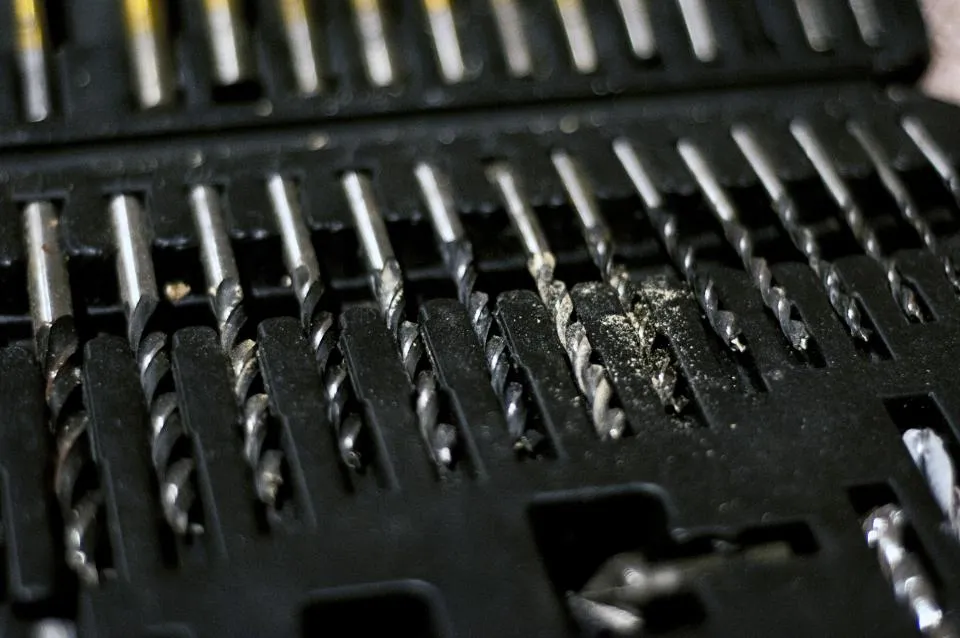
- Get a bit set with drill bits and screwdriver bits. Drill and driver bit sets → Amazon
Cordless drill/driver kits → Amazon
Second-tier tools (add as projects demand)
- Impact driver: drives long screws and lag bolts more easily than a drill. Often sold in combo kits with a drill.
- Circular saw or jigsaw: for cutting plywood and boards. A jigsaw handles curves and is less intimidating for beginners.
- Random orbit sander: for finishing wood projects.
- Oscillating multi-tool: cuts in tight spots, trims door casings, and removes grout.
Buy these when a project needs them, ideally on the same battery platform.
Measuring and marking
Accurate layout prevents most mistakes. At minimum: a tape measure, a combination or speed square, and pencils. See our measuring and marking guide.
Safety gear (not optional)
- Safety glasses marked Z87. OSHA's workplace rule references ANSI Z87.1, and it's a useful marking for home use too.
- Hearing protection for power tools.
- Dust mask or respirator for sanding and cutting.
- Work gloves for material handling. Don't wear them near spinning blades or bits, where they can catch.
See the safety gear guide. Safety glasses → Amazon
Storage
A tool bag or small toolbox keeps everything in one place. That matters more than it sounds, because a tool you can't find is a tool you don't have. Tool bags → Amazon
Pre-made kit vs. build your own
| Pre-made kit | Build your own | |
|---|---|---|
| Convenience | One purchase | Several purchases |
| Quality | Varies; often uneven across the kit | You choose quality where it matters |
| Fit | May include tools you won't use | Only what you need |
| Best for | First apartment, gift, quick start | Homeowners planning projects |
A common approach: start with a modest kit, then replace the tools you use most (tape measure, screwdrivers, drill) with better versions over time.
What to skip at first
- Specialty tools for jobs you haven't done yet.
- Big stationary tools before you know you'll use them.
- Cheap power tools on an obscure battery system you'll never expand.
FAQ
Should I buy a pre-made tool kit or build my own?
Pre-made kits are convenient and good for a first apartment. Building your own lets you choose better quality for the tools you'll use most. Many people start with a kit and upgrade the most-used pieces.
What's the first power tool to buy?
For most DIYers, a cordless drill/driver. It drills holes and drives screws, which covers a huge share of household projects.
Related guides
- Which Cordless Tool Brand to Buy Into: DEWALT vs. Milwaukee vs. RYOBI
- Must-Have Measuring and Marking Tools for Woodworking
- Shop Safety Gear Guide: Eyes, Ears, Lungs, and Hands